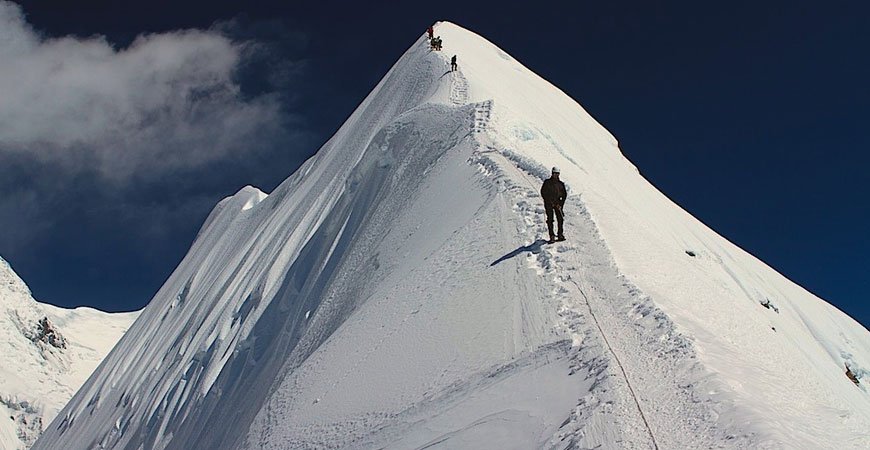
Island Peak (6160m) Climbing

Island Peak (6,189m.) climbing is one of the most popular and unquestionably most enlivening trekking in the world. Island peak trek provides an opportunity to visit the center region of the Khumbu. The magnificent vista visible throughout the trek will enthrall you and which will never be elapsed. Most importantly, you will get an occasion to view the world’s highest peak- Mount Everest.

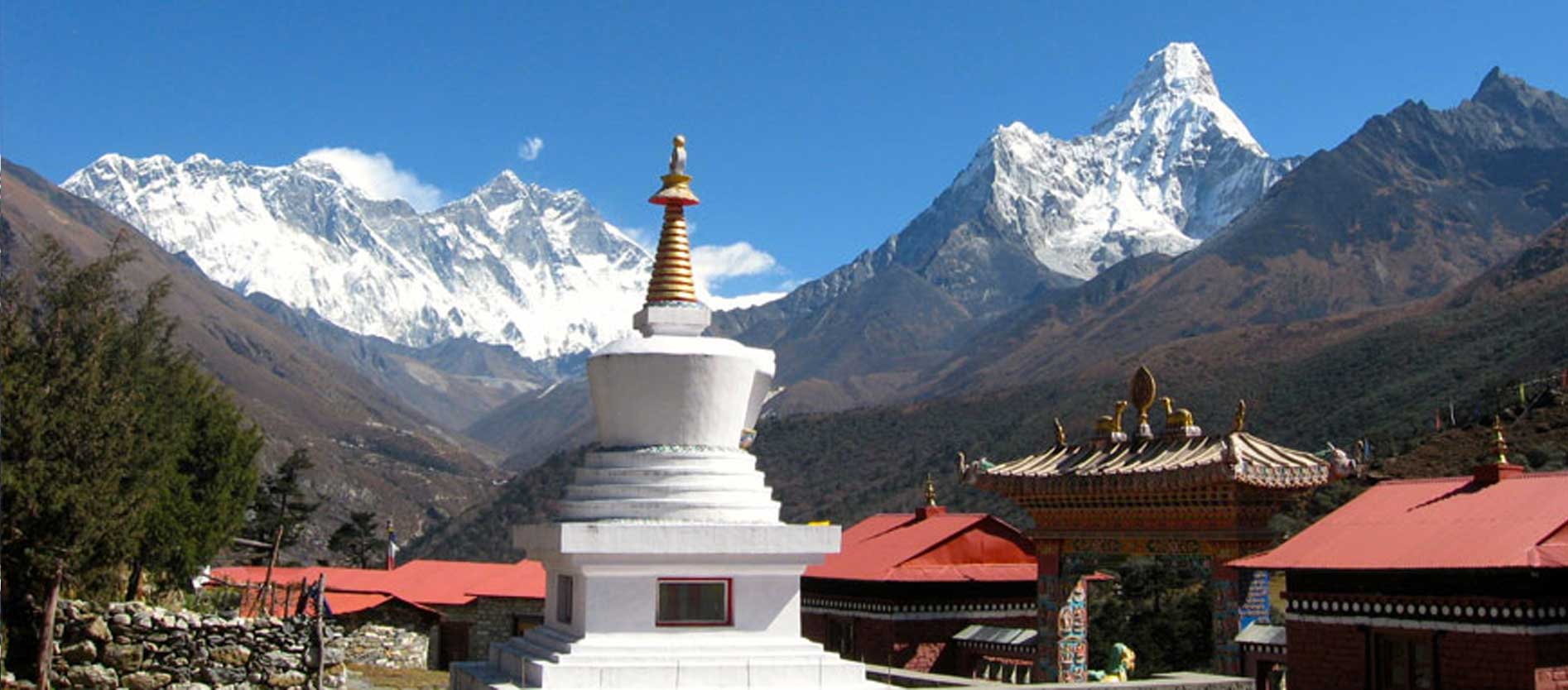
Renamed as Imja Tse in 1983, Island Peak trekking is one of the major trekking peaks in Everest area with an amazing and ice-covered West Face that rise up from the Lhotse Glacier. This peak entails one steep and uncovered 100 m snow climb. In addition, mostly it has non technical snow climb with eye-catching landscape and offers superb views of the summits – Lhotse (8501m.), Nuptse (7879m.), and Lhotse Middle Peak (8410m.).

Furthermore, you can walk up to Kalapathhar (5545m.) and Everest Base Camp, the famous trekking spots. From there, you can enjoy close up views of Mount Everest and an exciting panorama of sunrise on the snow capped peaks on top of the Khumbu Glacier early in the morning. Then, we move down to Chhukung and arrange for the Island Peak climb. The peak itself is in fact an expansion of the South crest of Lhotse Shar and is divided from it by a tiny col.

This 21 days lodge or tent trek to Island Peak Climbing designed by Nepal Tibet Tours & Treks is meant for those adventure lovers who are in searching for less difficult climbing and which also bestows the most well-known Himalayan in the world. If you are active, physically healthy but have inadequate time to trek, we arrange Island Peak trekking for you which is the ideal destination.

The Fees for Peak Climbing under NMA Permission:

There are various trekking peaks in the Everest, Annapurna and other regions of Nepal. Permits for these trekking peaks can be obtained on the payments.

Group Size 01 to 04 : US $ 350.

Group Size 05 to 08 : US $ 350.- + 40.- per extra person

Group Size 09 to 12 : US $ 510.- + 25.- per extra person

Mera Peak (6654m) Climbing Mera Peak (6654m) Climbing

Mera Peak is one of the renowned and the highest trekking peaks in Nepal. It mounts from the south of Everest and overlooks the turning point between the natural and deeply forested valleys of the Hinku and Hongu Drangkas. It is a trouble-free snow climb on the way to Mera Peak but at times crevasses set hurdles. As the ascend of Mera Peak keeps moving up two more High Base Camps are set at 5385m and further higher one at 5800m.

The most rewarding part of the Mera Peak climbing is to walk on the rarely walked region of Nepal, where the hillsides are densely and our path goes all the way through the pristine oak, rhododendron, birch, silver fir forest. Also, on the way, you can observe Mera Glacier and striking alpine lake. Besides, Mera Peak trek will let you go around traditional Sherpa villages of the Solu Khumbu which will be a daydream experience. We move on with an amazing peak vista of the eastern Himalayas of Nepal including Mt. Everest (8848m.), Lhotse (8516m.), Cho-Oyu (8201m.), Makalu (8463m.), Nuptse (7855m.), Kanchenjunga (8586m.), Chamlang (7319m.) and many more.

This 20 days Mera Peak trek designed by Nepal Tibet Tours & Treks is an exhilarating, amazing trek is the highest trekking mountain in Nepal in Khumbu (Everest) region which offers you a lifetime experience in Nepal. You will be accommodating at camp or lodge or guesthouse while going for Mera Peak in Nepal. The only requirement you require to climb Mera peak is your physical fitness and an outgoing sense of nature.

The Fees for Peak Climbing under NMA Permission:

There are various trekking peaks in the Everest, Annapurna and other regions of Nepal. Permits for these trekking peaks can be obtained on the payments.
Group Size 01 to 04 : US $ 350.
Group Size 05 to 08 : US $ 350.- + 40.- per extra person
Group Size 09 to 12 : US $ 510.- + 25.- per extra person
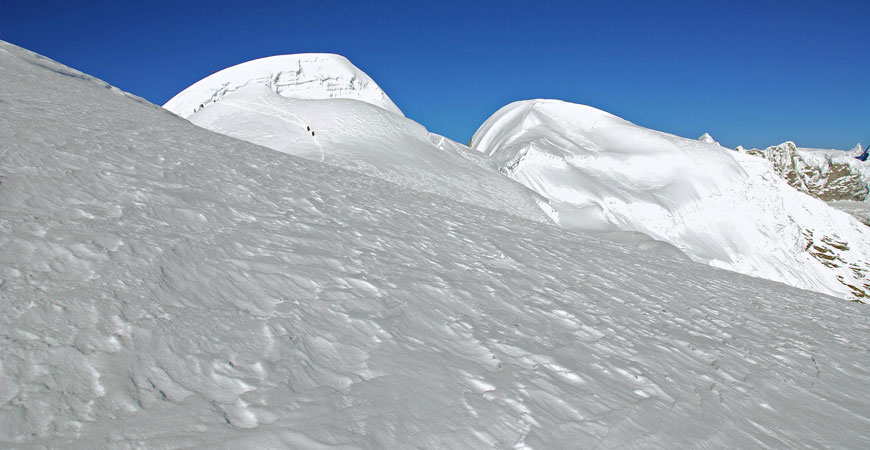
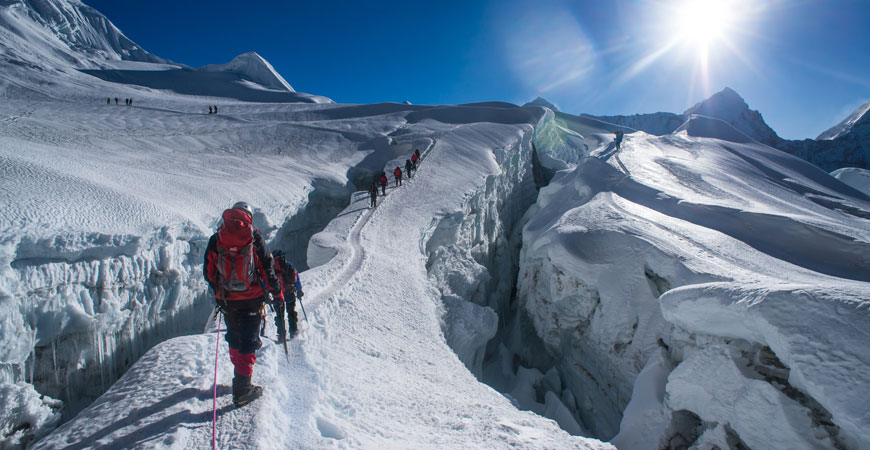
Island and Mera Peak with Everest Base Camp

This Trek starts from Kathmandu with morning flight to Lukla. Mount Everest or Sagarmatha or Chomolongma is the highest mountain on Earth, as measured by the height of its summit above sea level. One of the most popular trips that are carried in Everest region is Everest Base Camp Trek. This Trek will help trekkers to revitalize their adventure spirit. Every Trekker’s most popular destination, Everest Base Camp Trek, also known now-a-days as EBC Trek have been trekking destination since the first conquer of Mt. Everest (8848m) till this date. Most of the trek is spent in the Khumbu and Imja Valleys above the altitude of 3000m where the massive peaks of the Eastern Himalayas dominate the skyline. Just be assuring for one of the fantastic adventure of the life. One can enjoy with their Climbing to Island Peak (6173m) and Mera peak (6,421m) after done the Trek of Mt. Everest Base camp. This Trek and peak climbing can be one of the most interesting Trip.

The Fees for Peak Climbing under NMA Permission:

There are various trekking peaks in the Everest, Annapurna and other regions of Nepal. Permits for these trekking peaks can be obtained on the payments.

Group Size 01 to 04 : US $ 350.

Group Size 05 to 08 : US $ 350.- + 40.- per extra person

Group Size 09 to 12 : US $ 510.- + 25.- per extra person
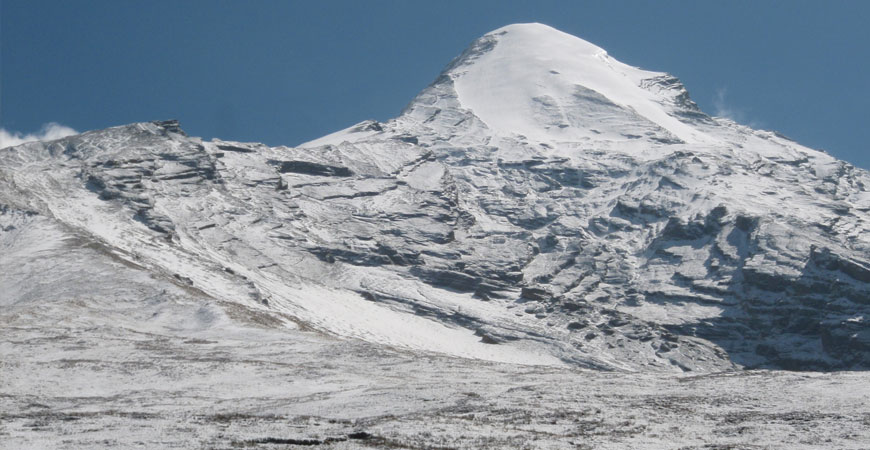
Pisang Peak (6091m) Climbing

Pisang Peak (6091m.) is the one of the most-admired and remarkable peak among the trekking mountains in Annapurna region of Nepal. Pisang Peak is undeniably a “sightseeing peak”.  It ascends from yak paddock over the village in a consistent incline of snow and ice to the ultimate peak pyramid. It lies just around the corner to the topmost pass of the world and offers excellent possibility for exploration. The western ridge comprises huge rock slabs which even makes the route harder.  Trekkers with petite skill in hiking can combine the famous classic Annapurna circuit trek with Pisang Peak climbing and have an extra ordinary experience of the panorama of Himalayas in Nepal.

Initially, we depart from Kathmandu to Besisahar and begin our trek from widespread Annapurna Circuit path and arrive at Pisang. From Pisang village, the path mounts through meager forest and meadow to Kharka at (4380m.) which is considered the finest spot for setting up the base camp. The distinct point shows the way to the final flurry slope which is fairly sheer and complicated to get in touch with the peak. In fact, the impressive views of Annapurna group from the summit can be observed including Annapurna II and IV, Gangapurna Tilicho Peak, and the Glacier Dome. After a successful climb to the peak, we continue our walk to Manang valley and further up to Thorong Pedi. We get an opportunity to come across the highest pass of the world, Thorong pass (5416m.) and subsequently walk to another part of the Annapurna, Muktinath. We tumble down further to Upper Mustang through picturesque Jharkot village, Kagbeni and ultimately arrive at capital of Mustang, Jomsom. After some ups and downs through Kalopani, Tatopani and Ghorepani to Nayapool and finally back to Pokhara.

The Fees for Peak Climbing under NMA Permission:

There are various trekking peaks in the Everest, Annapurna and other regions of Nepal. Permits for these trekking peaks can be obtained on the payments.

Group Size 01 to 04 : US $ 350.

Group Size 05 to 08 : US $ 350.- + 40.- per extra person

Group Size 09 to 12 : US $ 510.- + 25.- per extra person
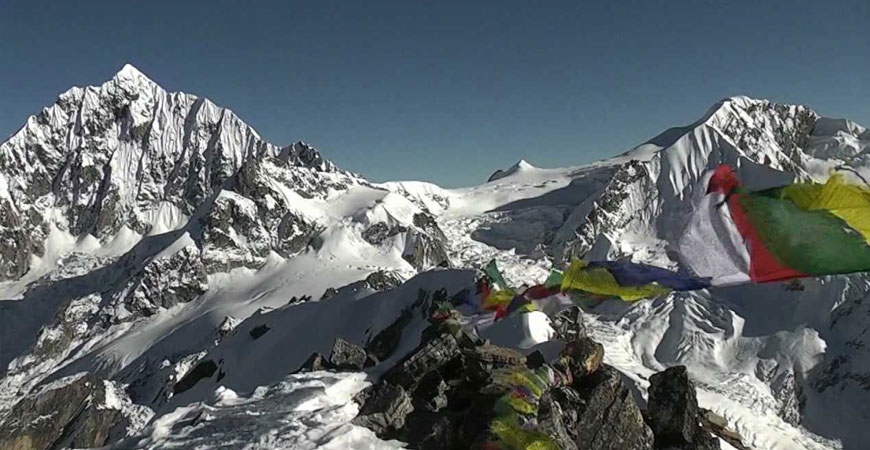
Dromo Peak (6855m) Climbing

Regarding Dromo Peak 6855m, it is a peak open only for expedition not a trekking peak like Mera and other. It means Royalty fee is (US$ 2,000) is levied by the Government and you have to be accompanied by a Liaison Officer. You have to procedure all documents as Expeditions.

Asking for climbing permission:
The following documents have to be sent to the Ministry of Tourism, Mountaineering Division, Kathmandu, Nepal.

  1. Complete Application (Schedule-1 of Regulations)
  2. Endorsement/Recommendation letter of the National Alpine club. (If there is no Alpine club, endorsement of the Government)
  3. Short biography of all members of the expedition (with photograph)
  4.  Map and/or photograph of the mountain indicating climbing route.
  5. Approach route map.
Copyright © 2026 by Nepal Tibet Tours & Treks
Designed & Developed By: Genesis Web Technology
×