Mera Peak (6654m) Climbing Mera Peak (6654m) Climbing

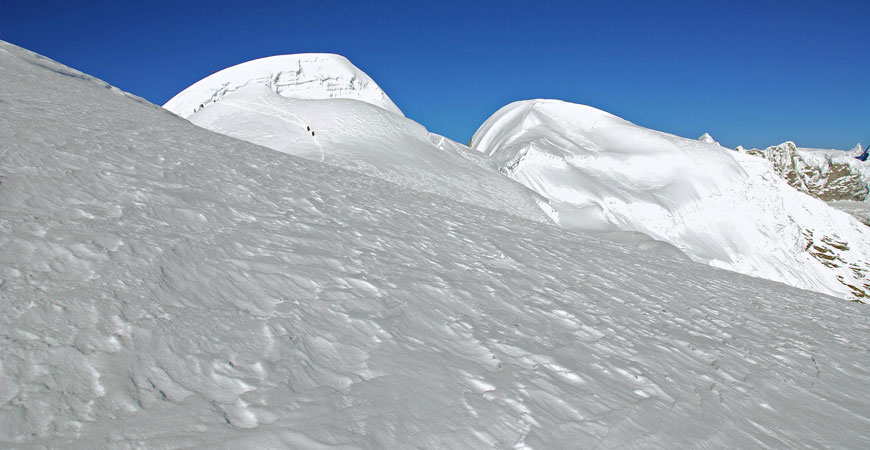
Mera Peak is one of the renowned and the highest trekking peaks in Nepal. It mounts from the south of Everest and overlooks the turning point between the natural and deeply forested valleys of the Hinku and Hongu Drangkas. It is a trouble-free snow climb on the way to Mera Peak but at times crevasses set hurdles. As the ascend of Mera Peak keeps moving up two more High Base Camps are set at 5385m and further higher one at 5800m.

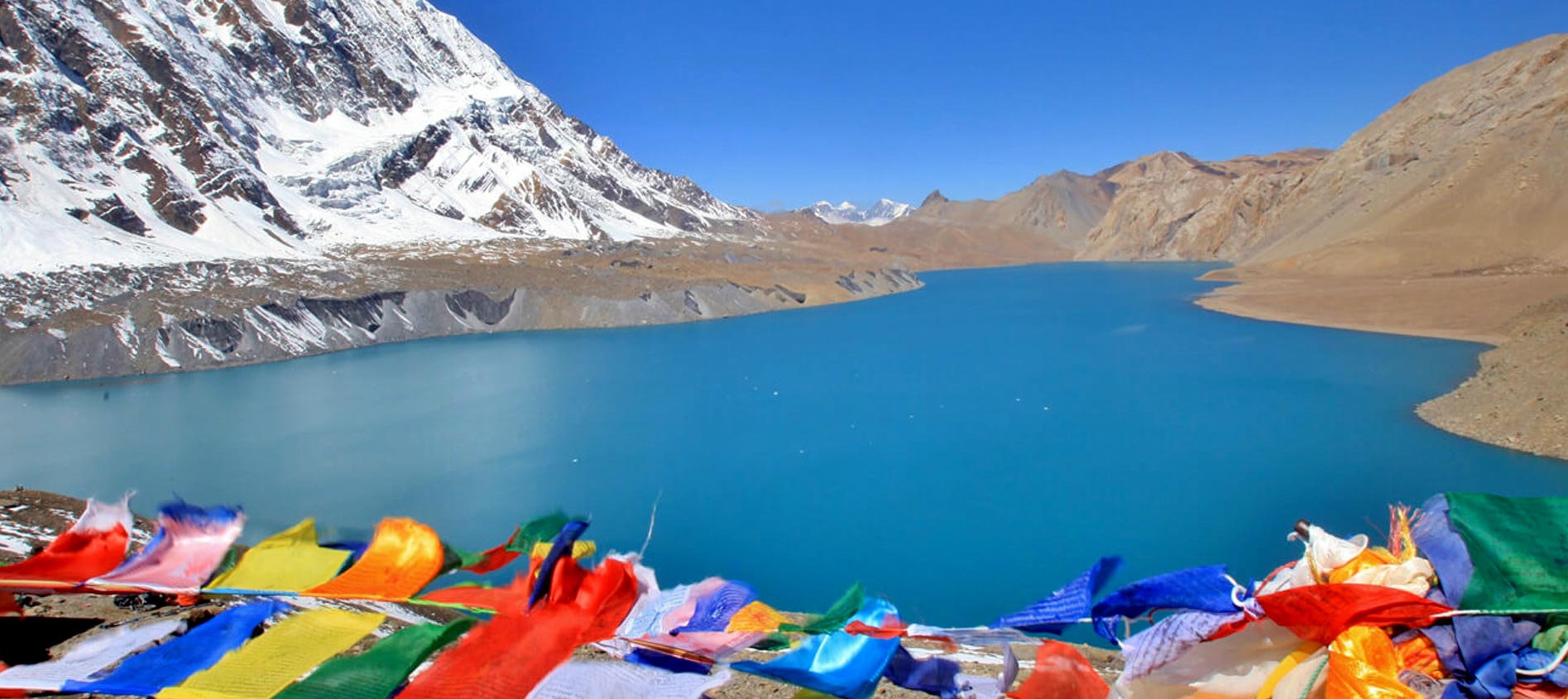
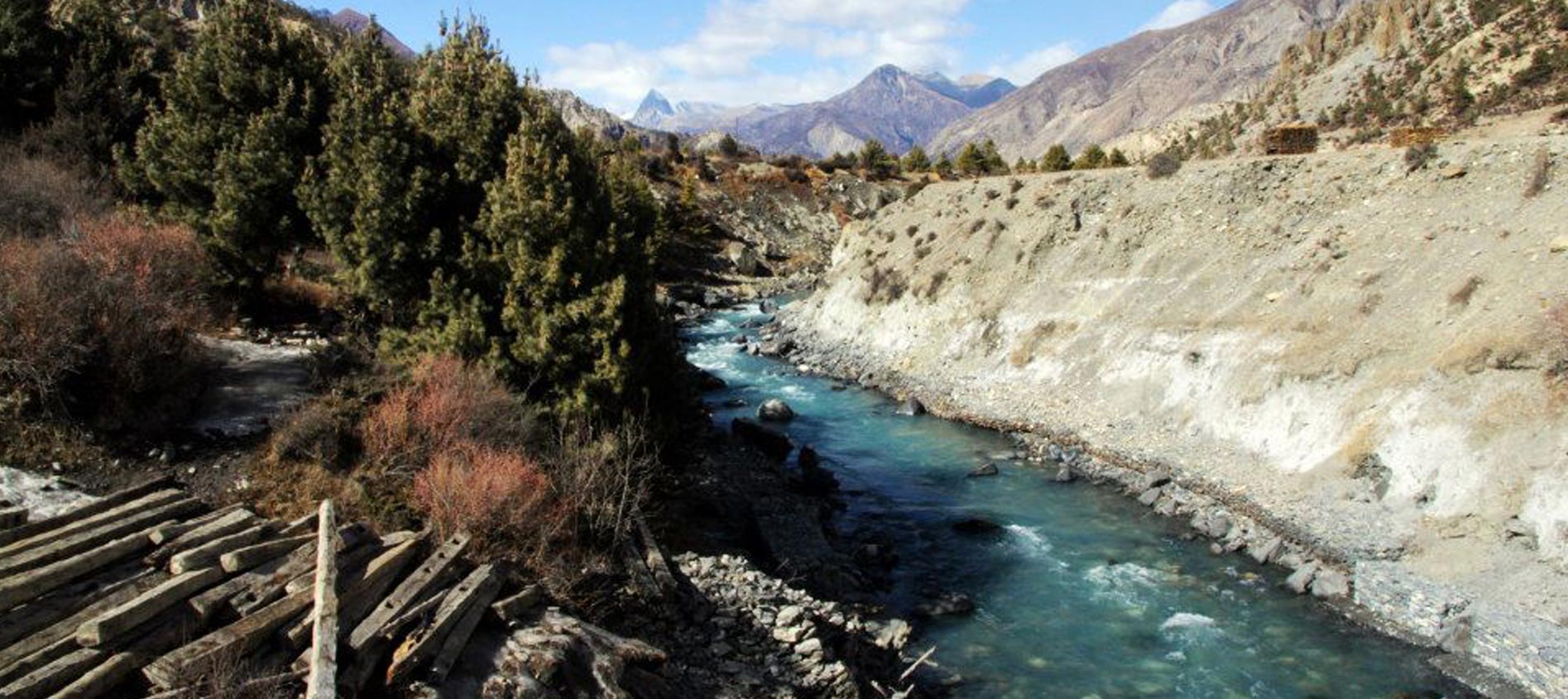
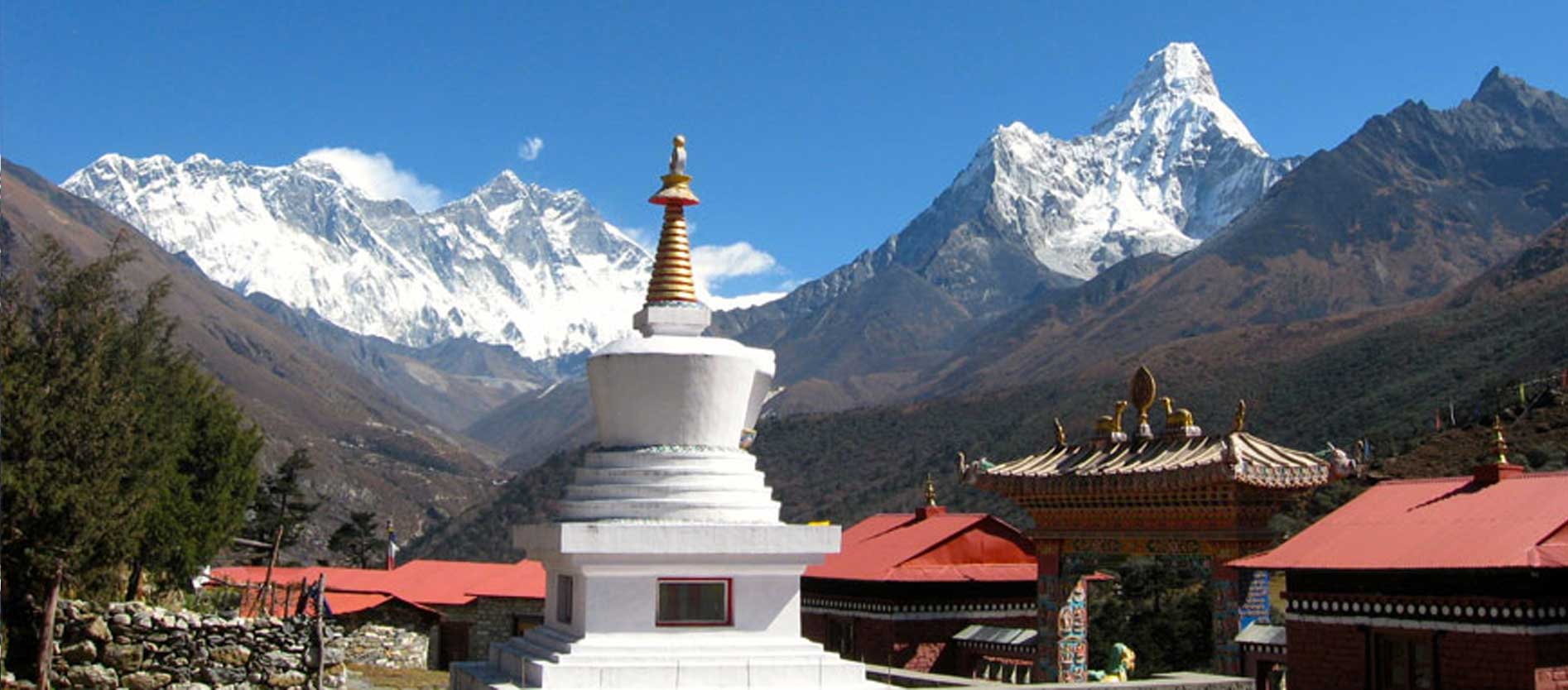
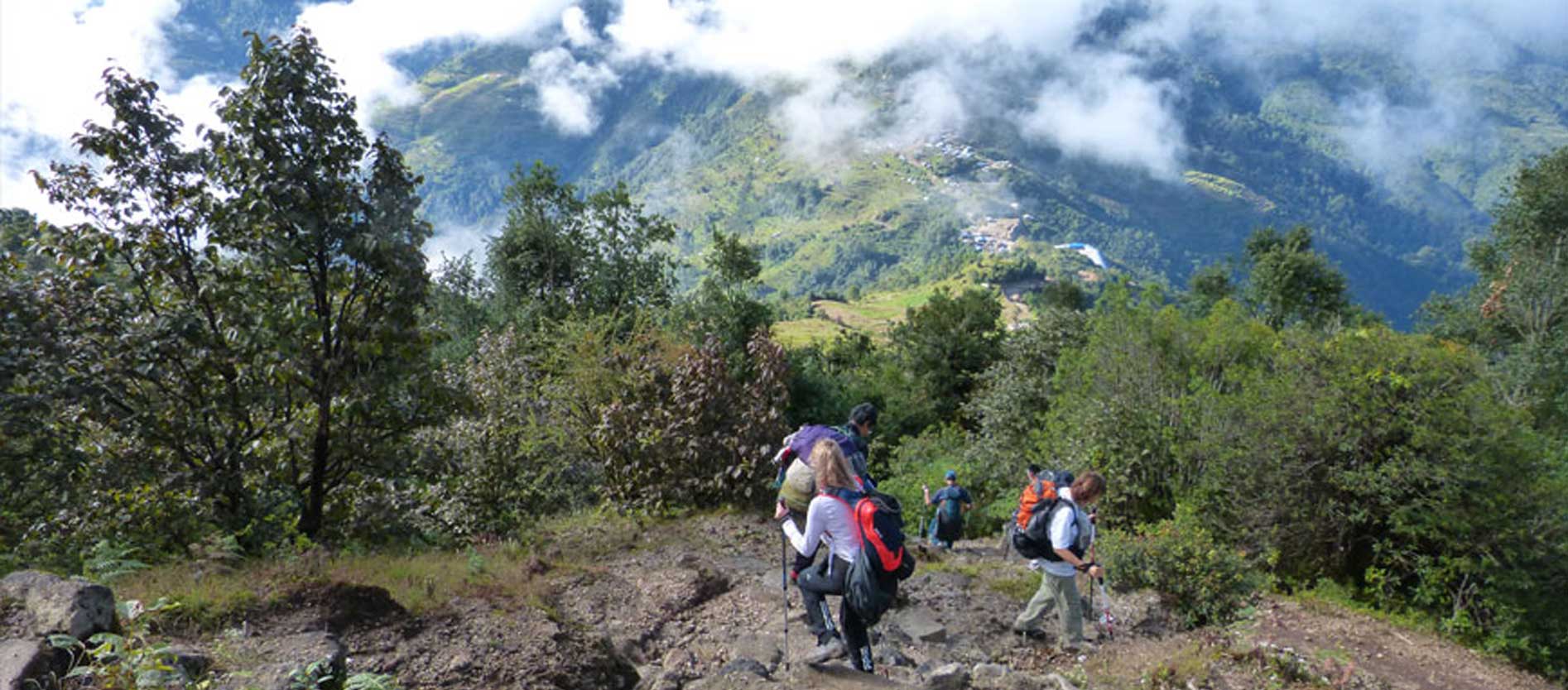
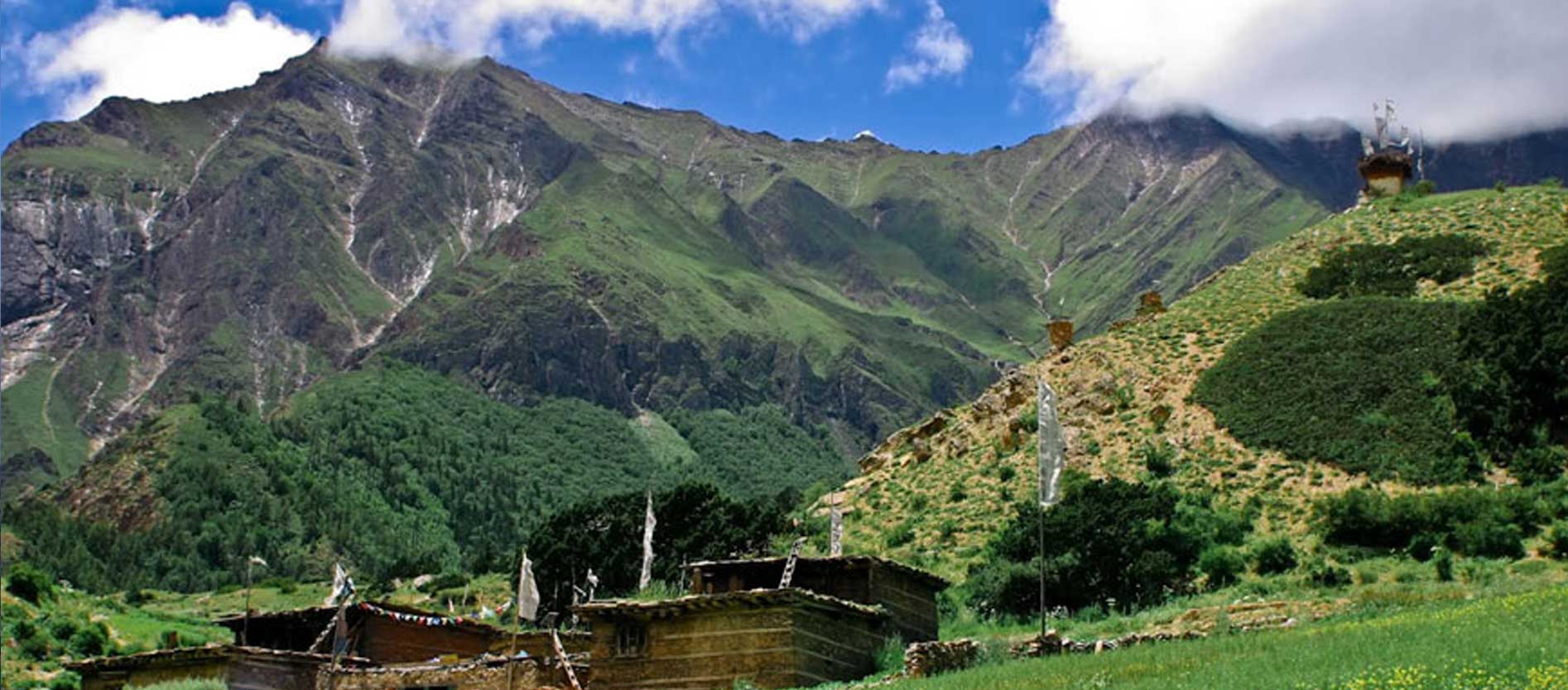
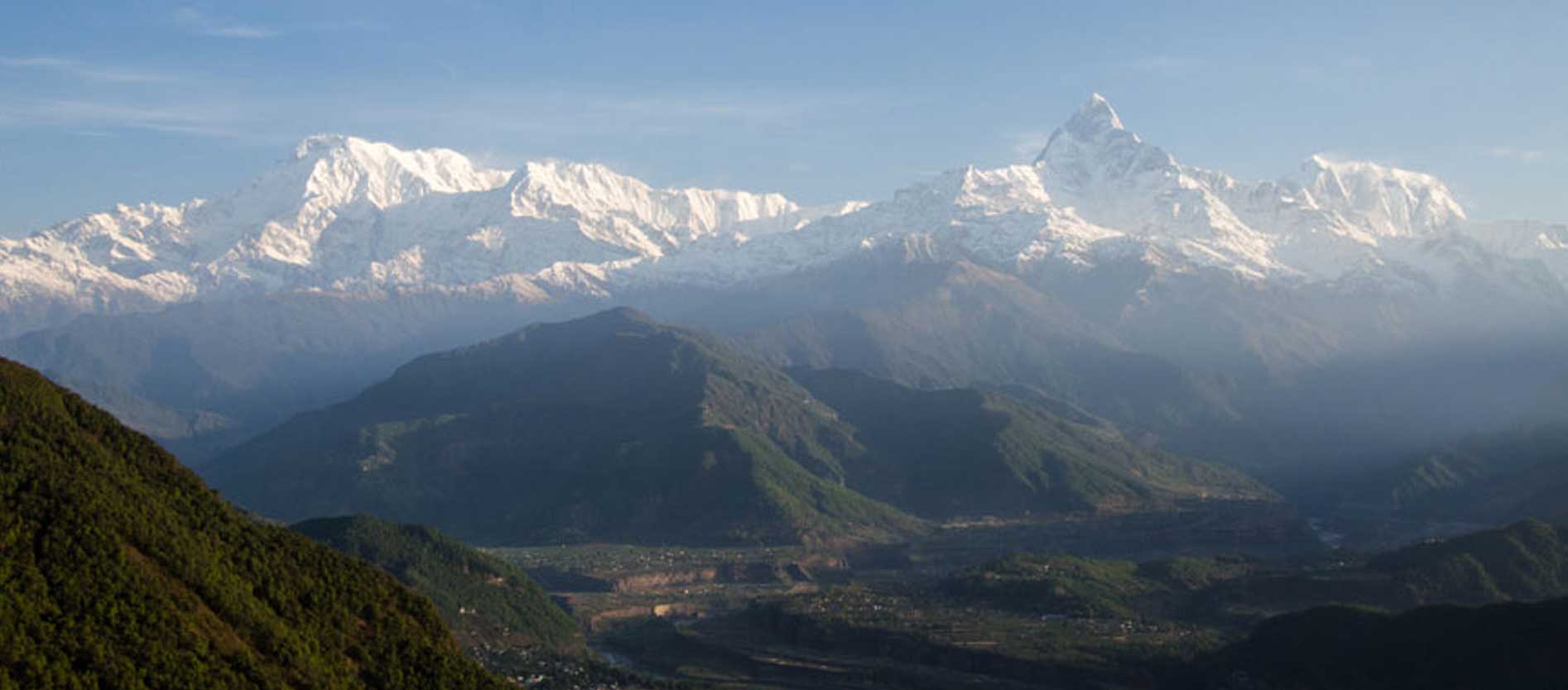
The most rewarding part of the Mera Peak climbing is to walk on the rarely walked region of Nepal, where the hillsides are densely and our path goes all the way through the pristine oak, rhododendron, birch, silver fir forest. Also, on the way, you can observe Mera Glacier and striking alpine lake. Besides, Mera Peak trek will let you go around traditional Sherpa villages of the Solu Khumbu which will be a daydream experience. We move on with an amazing peak vista of the eastern Himalayas of Nepal including Mt. Everest (8848m.), Lhotse (8516m.), Cho-Oyu (8201m.), Makalu (8463m.), Nuptse (7855m.), Kanchenjunga (8586m.), Chamlang (7319m.) and many more.

This 20 days Mera Peak trek designed by Nepal Tibet Tours & Treks is an exhilarating, amazing trek is the highest trekking mountain in Nepal in Khumbu (Everest) region which offers you a lifetime experience in Nepal. You will be accommodating at camp or lodge or guesthouse while going for Mera Peak in Nepal. The only requirement you require to climb Mera peak is your physical fitness and an outgoing sense of nature.

The Fees for Peak Climbing under NMA Permission:

There are various trekking peaks in the Everest, Annapurna and other regions of Nepal. Permits for these trekking peaks can be obtained on the payments.
Group Size 01 to 04 : US $ 350.
Group Size 05 to 08 : US $ 350.- + 40.- per extra person
Group Size 09 to 12 : US $ 510.- + 25.- per extra person
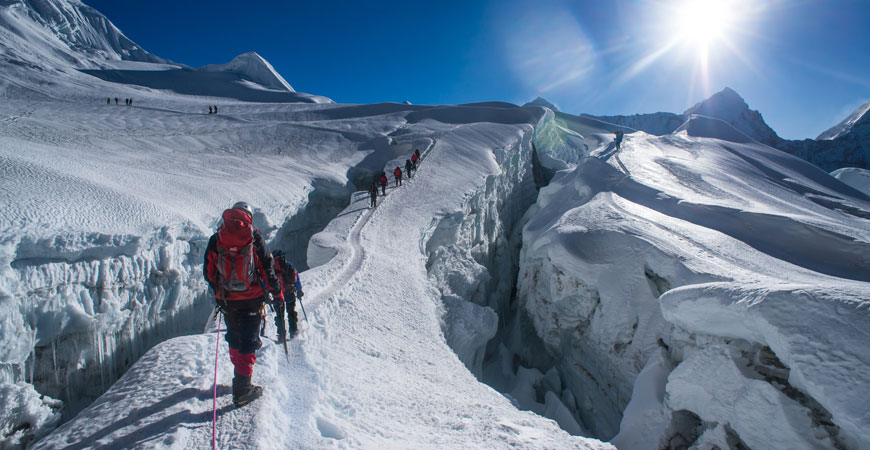
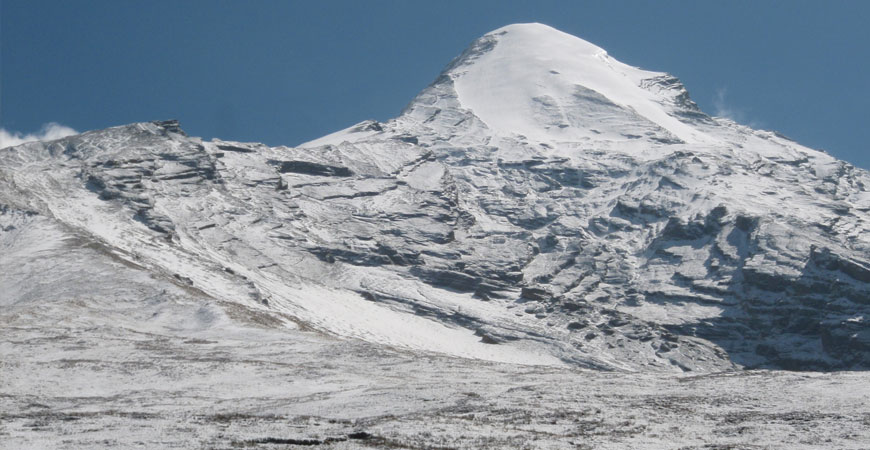
Island and Mera Peak with Everest Base Camp

This Trek starts from Kathmandu with morning flight to Lukla. Mount Everest or Sagarmatha or Chomolongma is the highest mountain on Earth, as measured by the height of its summit above sea level. One of the most popular trips that are carried in Everest region is Everest Base Camp Trek. This Trek will help trekkers to revitalize their adventure spirit. Every Trekker’s most popular destination, Everest Base Camp Trek, also known now-a-days as EBC Trek have been trekking destination since the first conquer of Mt. Everest (8848m) till this date. Most of the trek is spent in the Khumbu and Imja Valleys above the altitude of 3000m where the massive peaks of the Eastern Himalayas dominate the skyline. Just be assuring for one of the fantastic adventure of the life. One can enjoy with their Climbing to Island Peak (6173m) and Mera peak (6,421m) after done the Trek of Mt. Everest Base camp. This Trek and peak climbing can be one of the most interesting Trip.

The Fees for Peak Climbing under NMA Permission:

There are various trekking peaks in the Everest, Annapurna and other regions of Nepal. Permits for these trekking peaks can be obtained on the payments.

Group Size 01 to 04 : US $ 350.

Group Size 05 to 08 : US $ 350.- + 40.- per extra person

Group Size 09 to 12 : US $ 510.- + 25.- per extra person
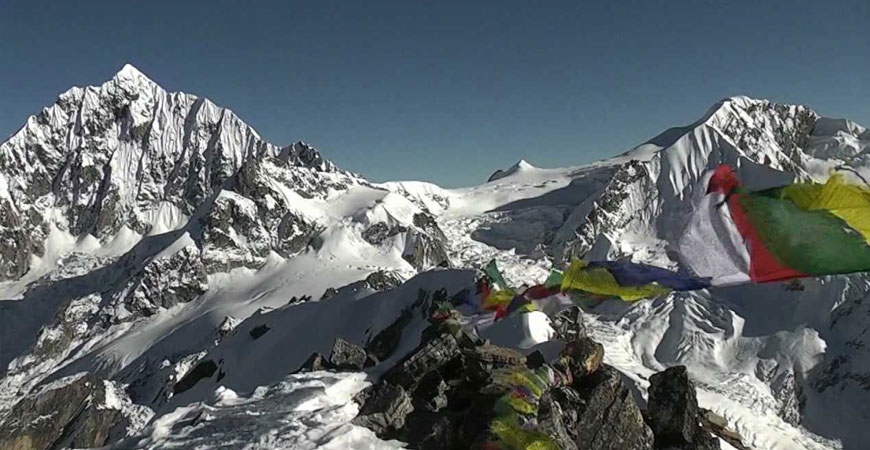
Pisang Peak (6091m) Climbing

Pisang Peak (6091m.) is the one of the most-admired and remarkable peak among the trekking mountains in Annapurna region of Nepal. Pisang Peak is undeniably a “sightseeing peak”.  It ascends from yak paddock over the village in a consistent incline of snow and ice to the ultimate peak pyramid. It lies just around the corner to the topmost pass of the world and offers excellent possibility for exploration. The western ridge comprises huge rock slabs which even makes the route harder.  Trekkers with petite skill in hiking can combine the famous classic Annapurna circuit trek with Pisang Peak climbing and have an extra ordinary experience of the panorama of Himalayas in Nepal.

Initially, we depart from Kathmandu to Besisahar and begin our trek from widespread Annapurna Circuit path and arrive at Pisang. From Pisang village, the path mounts through meager forest and meadow to Kharka at (4380m.) which is considered the finest spot for setting up the base camp. The distinct point shows the way to the final flurry slope which is fairly sheer and complicated to get in touch with the peak. In fact, the impressive views of Annapurna group from the summit can be observed including Annapurna II and IV, Gangapurna Tilicho Peak, and the Glacier Dome. After a successful climb to the peak, we continue our walk to Manang valley and further up to Thorong Pedi. We get an opportunity to come across the highest pass of the world, Thorong pass (5416m.) and subsequently walk to another part of the Annapurna, Muktinath. We tumble down further to Upper Mustang through picturesque Jharkot village, Kagbeni and ultimately arrive at capital of Mustang, Jomsom. After some ups and downs through Kalopani, Tatopani and Ghorepani to Nayapool and finally back to Pokhara.

The Fees for Peak Climbing under NMA Permission:

There are various trekking peaks in the Everest, Annapurna and other regions of Nepal. Permits for these trekking peaks can be obtained on the payments.

Group Size 01 to 04 : US $ 350.

Group Size 05 to 08 : US $ 350.- + 40.- per extra person

Group Size 09 to 12 : US $ 510.- + 25.- per extra person
Dromo Peak (6855m) Climbing

Regarding Dromo Peak 6855m, it is a peak open only for expedition not a trekking peak like Mera and other. It means Royalty fee is (US$ 2,000) is levied by the Government and you have to be accompanied by a Liaison Officer. You have to procedure all documents as Expeditions.

Asking for climbing permission:
The following documents have to be sent to the Ministry of Tourism, Mountaineering Division, Kathmandu, Nepal.

  1. Complete Application (Schedule-1 of Regulations)
  2. Endorsement/Recommendation letter of the National Alpine club. (If there is no Alpine club, endorsement of the Government)
  3. Short biography of all members of the expedition (with photograph)
  4.  Map and/or photograph of the mountain indicating climbing route.
  5. Approach route map.

Bheri River Rafting

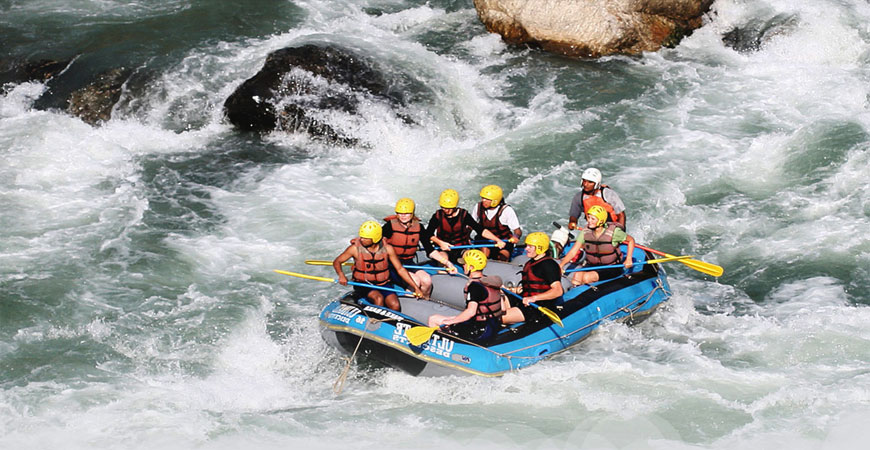
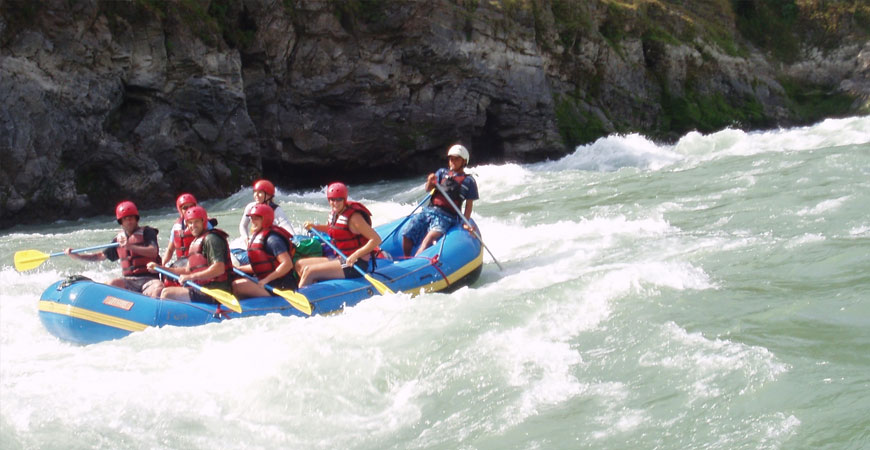
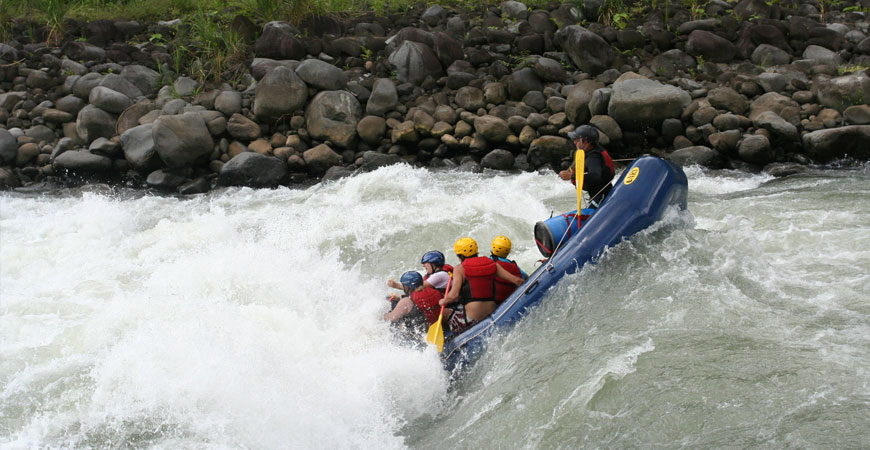
A trip to Bheri River, you have options between taking a one and half hour flight to Nepalgunj from Kathmandu or a 627 km. long journey by road. The Bheri River is so remote that it remains relatively unexplored. The first section of the river is quite tough with twists and turns, creating many exciting narrow gorge section of the river with vertical cliff of 200-300 feet on either side. The gorge is interspersed with open valleys where there exist small villages. The trip can be continued with a jungle tour in the Bardiya Wildlife Reserve. A remote and easy river, blue water, white beaches and fine campsites.This must be one of your premier rafting trips in Nepal. It has some of the best fishing in Nepal, together with beautiful and diverse scenery, lots of wildlife and unspoiled villages. Two large tributaries, the Thuli (large) and the Sani (small) join at Ramanagat to form the main Bheri river.

Karnali River Rafting

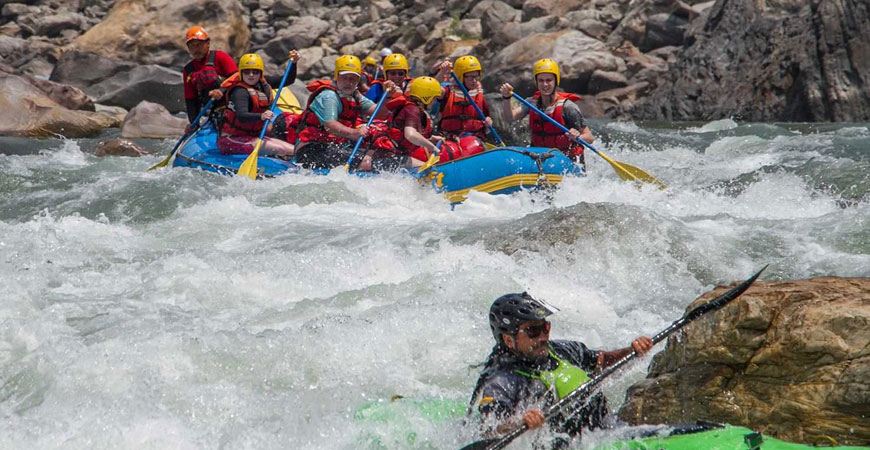
Karnali River, Nepal’s mightiest river is arguably the finest multi-day river trip in Nepal, and the classic Himalayan River expedition. The Karnali’s headwaters come off Mount Kailas in Tibet and slice through the Himalayas in a series of magnificent gorges and pristine forest. On our 180 kilometers River journey we won’t see a single sign of the modern world but natural beauty and cultures. It is one of the last places in Nepal that you can see old grown forest and have a real chance of seeing Nepal’s wildlife like Monkeys, Langur, Rhesus, leopards, bear, martins, deer, crocodiles and garials; even tigers. The river also supports some of the finest fish habitat in Nepal, with giant catfish and Golden Masher prowling the depths. Midway through the trip we select a choice piece of beach and for two nights we stay at the same camp and people have an opportunity to explore this beautiful country, wallow in a mud bank, play in the region’s plentiful waterfalls, or just hang out and learn something about their fellow rafters. Whitewater ranges from easygoing class three, to bone crushing class five, depending on the time of year. Regardless of the month, the Karnali always offers good, hard rapids with miles of beautiful scenery and deep river gorges.

Tamor River Rafting

Tamor a mighty River lies in the Eastern part of Nepal, it begin from Mt. Kanchanjunga and other numerous mountains of Eastern part. A trip to Tamor offers a thrilling experience combined trekking, Rafting and exploration through cultural heritage. The snows of Kanchenjunga feed a challenging less known relative of the Sun Kosi. The spectacular Tamor combines an exhilarating river expedition with one of the best short treks in the Himalayas. Picking up our team of fifty porters at Basantapur we trek for 3 days through ancient moss covered Rhododendron forests and sunlit meadows. The short trek is stunning, with great views of Kanchenjunga, Makalu and Everest. Descending to Dobhan we wander through charming Gurung villages and emerald fields of rice.

Children play excitedly along the trail as we pass, snow-capped Himalayan giants surround us, and the champagne river churns and bubbles below. It gets even better – local people are a fascinating collage of tribes and castes who have perfected the brewing of their local drink, Tungba, to a fine art. At Dobhan three tributaries of the Tamur join their forces, combining the racing rivers of the high mountains to the north. Steep canyon walls enclose the river and the rapids are powerful and continuous. In the middle section the river opens up and there are beautiful white sandy beaches. The last few days where the river turns back to the west is phenomenal. Towering waves leap skyward, with seemingly endless rapids surging through steep canyon walls. Small fishermen’s villages line the confluence of every major tributary, while wild monkeys watch from the jungle as we drift past. For people who want a longer trip that combines a spectacular short trek with intense whitewater, the Tamor is without a doubt the river to run.

Bhotekoshi River Rafting

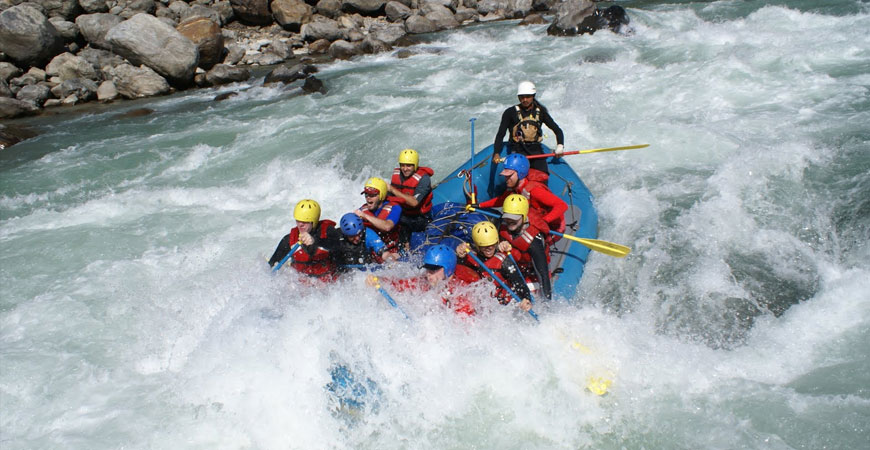
The harmony of Tibet and the Himalayas, Bhote Koshi river rafting is one of the best white water adventures in Nepal (class4 to 5). Your rafting to the starting point takes you through the mountains, past a vista of traditional Tibetan life. Once you’re on the river, though there is no time to stop and admire the scenery, as you and your fellow rafters negotiate some of the fastest and steepest rapids in Nepal. This true adventure can be rafted between October and December and February and April.

Marshyandi River Rafting

Locally, it is used to say that Marshyangdi is the raging river in Nepal and describes one of the best whitewater runs in the world. One of the best class 4 kayaking rivers in the world-continuous, exhilarating whitewater with magnificent mountain backdrops. Recommended for expert kaykers and rafters. If it’s adventure you seek, you’ll find it on this trip with one day of easy trekking and five days of intense rafting. Only recently opened for commercial rafting (many rapids have not been named yet), the Marshyangdi is one of the next generations of rivers in Nepal, steeper and with a much more continuous stretch of rapids.The scenery is magnificent with every bend of the river opening up fresh vistas of some of the world’s highest mountains, but these are behind-as someone said “great views but you need rear view mirrors”

Trishuli River Rafting

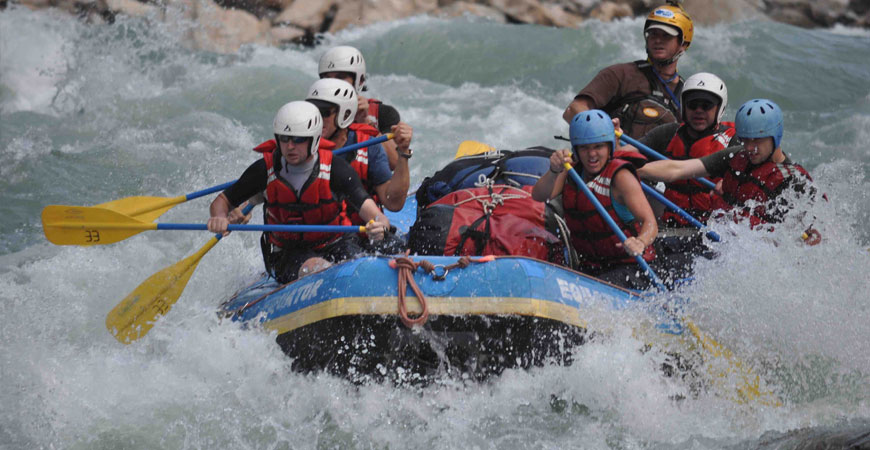
For first time paddlers, a trip down the Trisuli is an experience not to be missed (class 3 to 4+ in high water). While you learn to handle the river’s well spaced, straightforward rapids, a panorama of stunning gorges drifts quietly past. During the monsoon, the river promises a more challenging ride, with powerful rapids and whirlpools. This trip can easily be combined with a visit to Chitwan National Park or Pokhara.

Copyright © 2026 by Nepal Tibet Tours & Treks
Designed & Developed By: Genesis Web Technology
×